The Greatest Wildlife Arena on Earth
From the Great Migration to walking safaris on the endless plains, the Serengeti delivers experiences that define what safari means.
Where the Plains Have No End
The Serengeti is the most celebrated wildlife ecosystem on the planet. Its name, derived from the Maasai word "siringet" meaning "endless plains," describes a landscape of 14,763 square kilometres of open grassland, acacia woodland, and riverine forest that supports the largest terrestrial mammal migration on Earth.
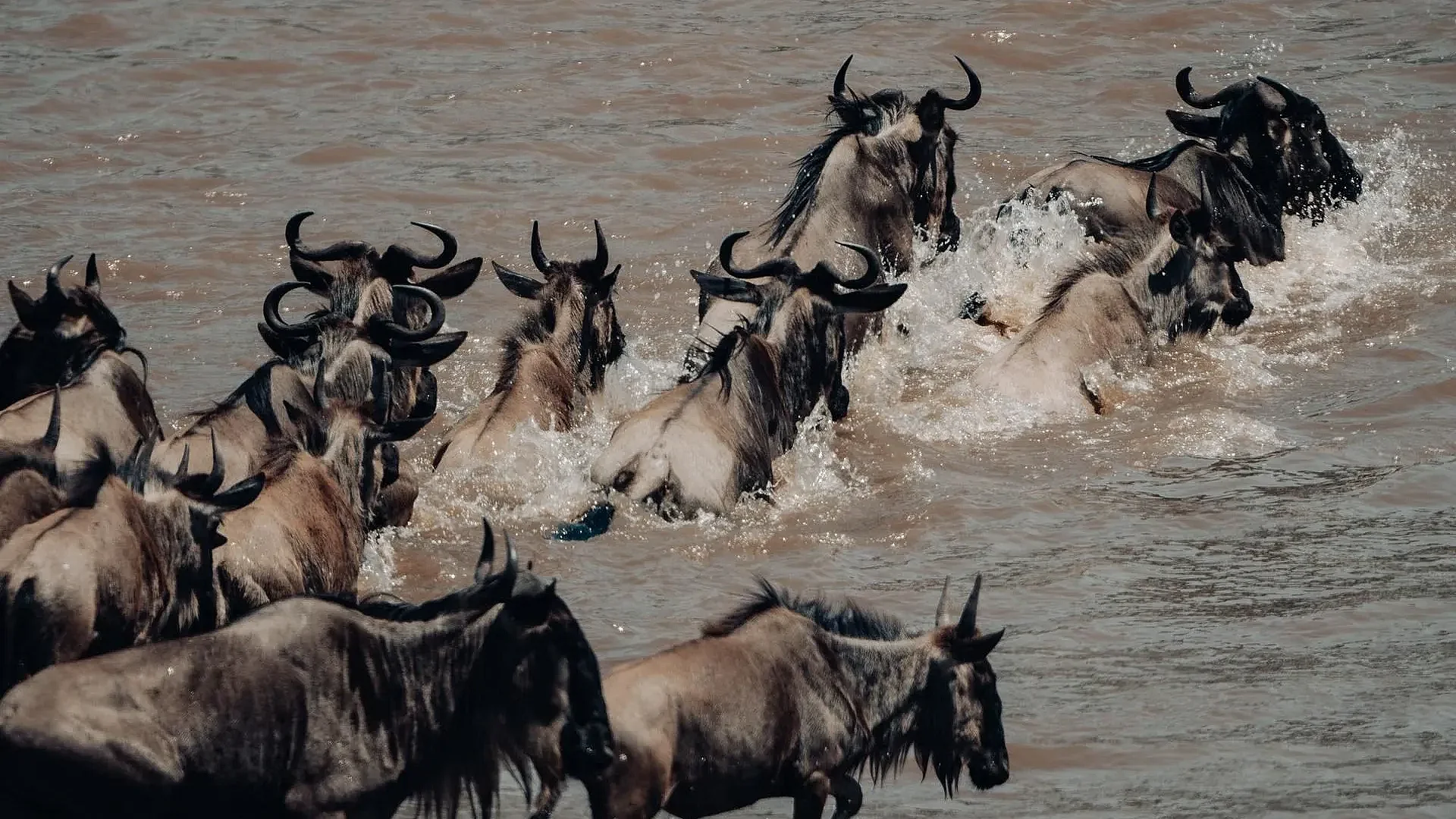
Over 1.5 million wildebeest, 200,000 zebra, and 350,000 gazelle traverse the Serengeti in a continuous clockwise journey, pursued by Africa's greatest concentration of predators. From our camp in the Central Serengeti, you have privileged access to some of the finest wildlife viewing on the continent.
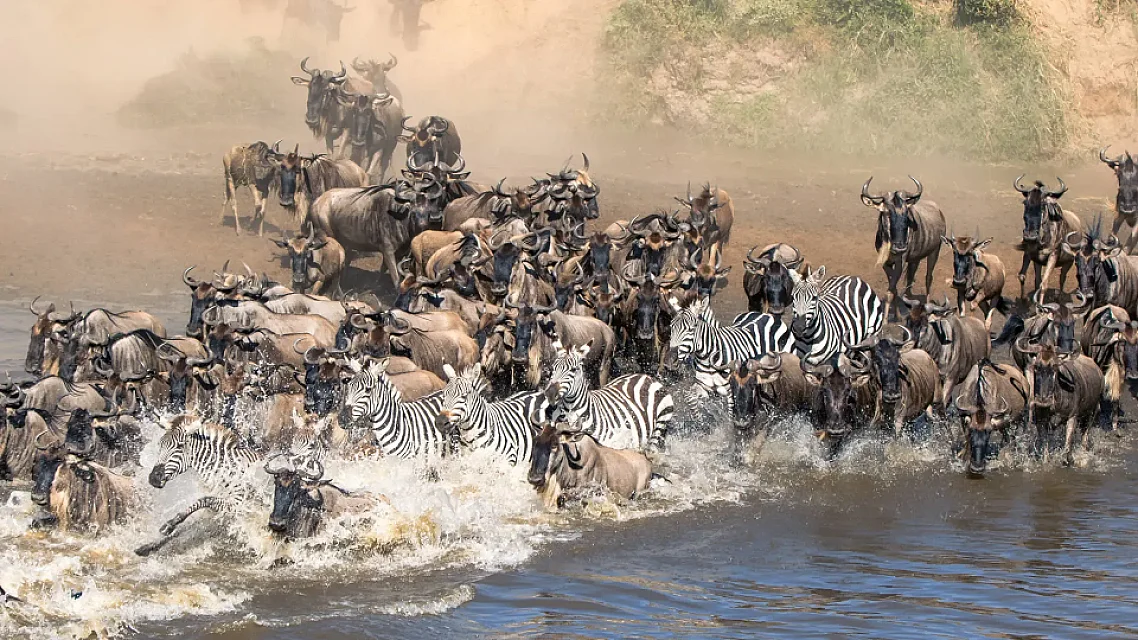
Migration river crossings: July to October
More Experiences



When to Visit the Serengeti
The Serengeti offers extraordinary wildlife year-round, with each season delivering a distinct chapter of the migration story.
Dry Season
June to October
The migration herds reach the northern Serengeti and Mara River, producing the dramatic river crossings that define the Great Migration. Predator activity peaks and the thinning vegetation makes for exceptional game viewing across the park.
Calving Season
December to March
The herds congregate on the southern plains for calving. An estimated 8,000 wildebeest calves are born every day over a two-week period, attracting lions, cheetahs, hyenas, and wild dogs in extraordinary numbers.
Green Season
April to May
The short rains transform the Serengeti into a lush green landscape. Migratory birds arrive, the herds begin their northward march through the Central Serengeti, and fewer visitors mean a more exclusive experience.
Plan Your Serengeti Safari
Every itinerary is crafted around the season, the migration, and your interests. Whether you want the drama of a river crossing or the serenity of the southern plains at calving, we will place you in exactly the right spot.